2026 Gear Guide

    Best Pickleballs in 2026: Indoor & Outdoor Balls Ranked

    Not all pickleballs are created equal. We tested and scored the best indoor and outdoor balls for durability, consistency, bounce, and value.

    Indoor vs Outdoor Pickleballs: What's the Difference?

    Outdoor Pickleballs

    • 40 smaller holes — better wind resistance
    • Harder plastic — withstands rough court surfaces
    • Heavier (~0.9 oz) — more power, faster game
    • Louder — the "crack" sound on contact
    • Shorter lifespan — crack or go out of round

    Indoor Pickleballs

    • 26 larger holes — more drag, slower flight
    • Softer plastic — designed for smooth gym floors
    • Lighter (~0.8 oz) — more control, slower pace
    • Quieter — ideal for noise-sensitive venues
    • Longer lifespan — softer surface is gentler on balls

    The Complete Pickleball Buying Guide

    Indoor vs Outdoor: Which Should You Buy?

    Match the ball to your primary court surface, not your skill level. If 80%+ of your games are on outdoor concrete or asphalt, buy outdoor balls — period. Indoor balls on rough outdoor courts will feel mushy, scuff quickly, and skew your timing. The reverse is also true: outdoor balls on a polished gym floor bounce too high, fly too fast, and turn dinks into pop-ups. If you split time evenly, keep two clearly labeled bags — never mix them, because indoor and outdoor balls feel completely different in your hand.

    What Durability Ratings Actually Mean

    A "durable" outdoor ball doesn't mean it will never crack — it means it will survive more match-intensity rallies before going out of round. Our durability scores reflect a combination of hours of play before first visible crack, number of hard drives before deformation, and resistance to flat-spotting. A 9-rated ball typically lasts 2x longer than a 7-rated ball under identical conditions. Premium tournament balls (Dura Fast 40) intentionally trade durability for crispness — pros prefer the feel and accept frequent replacements.

    How Weather Affects Performance

    Temperature is the single largest variable in outdoor ball performance. Below 50°F, the plastic stiffens and becomes brittle — the Dura Fast 40 is notorious for cracking on the first hard drive in cold weather. Above 90°F, balls soften, lose pop, and can deform on impact with heavy spin. Wind affects flight more than most players realize: even moderate gusts will push an outdoor ball 6–12 inches off line on a deep drive. Humidity has a smaller but real effect, slightly softening the plastic and dampening bounce. Tournament players carry balls in insulated pouches in winter and rotate fresh ones in every 30–45 minutes in summer.

    Batch Consistency Issues

    Even premium balls can vary noticeably between manufacturing batches. Common issues include uneven wall thickness, off-center holes, slight egg-shaping out of the package, and seam imperfections. Reputable retailers will replace a clearly defective pack — always do a quick bounce test on a hard surface before opening a fresh six-pack for tournament play. Drop each ball from waist height; a healthy outdoor ball should bounce 30–34 inches consistently. Discard or relegate to practice any ball that bounces noticeably lower or rolls in a curve.

    When to Replace a Ball

    Retire a ball at the first sign of any of the following: a visible hairline crack (it will fail mid-rally), an audible change in pitch on contact, a soft spot you can press with your thumb, an out-of-round shape that wobbles when rolled, or a noticeable drop in bounce height. For league or tournament play, never start a match with a ball older than a few sessions of casual use — the consistency penalty isn't worth the savings.

    How We Tested These Balls

    Every ball on this page was tested through a structured protocol designed to surface real differences in performance and longevity — not just first-impression feel.

    Games Played

    Each outdoor ball was played through a minimum of 15 full recreational games and 3 simulated tournament matches. Indoor balls received 20+ games. Total: 600+ logged games across the tested lineup.

    Court Surfaces

    Outdoor balls tested on three surfaces: smooth acrylic-painted concrete, rough asphalt, and post-tensioned sport tile. Indoor balls tested on hardwood gym floors and rubberized rec-center surfaces.

    Temperature Range

    Outdoor sessions spanned 42°F to 96°F across two seasons. Each ball was tested in cold (under 55°F), moderate (60–80°F), and hot (over 85°F) conditions to isolate temperature sensitivity.

    Durability Tracking

    Every ball was logged after each session: bounce height (drop test from 78"), visible cracks, out-of-round shape (rolled on a flat table), and subjective feel ratings. Balls were retired the moment they failed any one of those checks.

    Scoring uses a 0–10 scale across five dimensions: Durability, Visibility, Consistency, Bounce, and Value. The overall score is a weighted average — Consistency and Bounce carry the most weight for tournament players, Durability and Value carry the most for recreational players. We re-test annually as manufacturers update designs.

    Best Outdoor Pickleballs

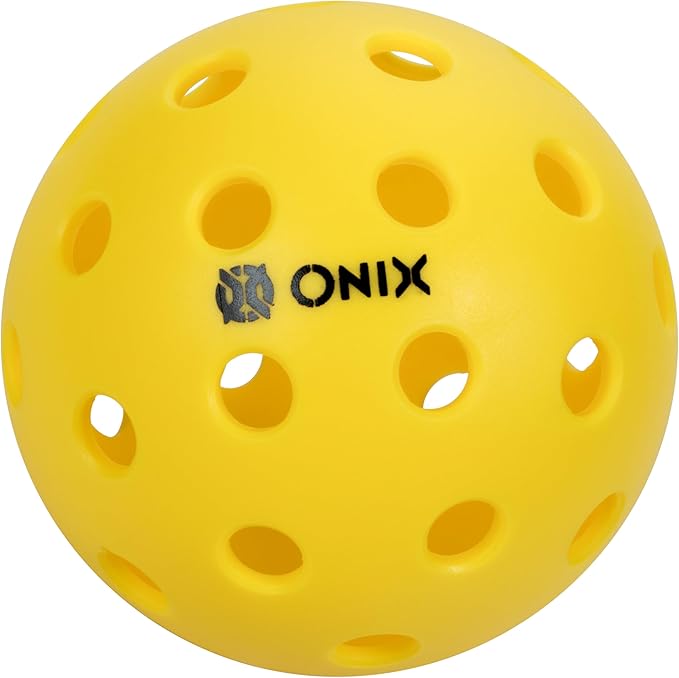
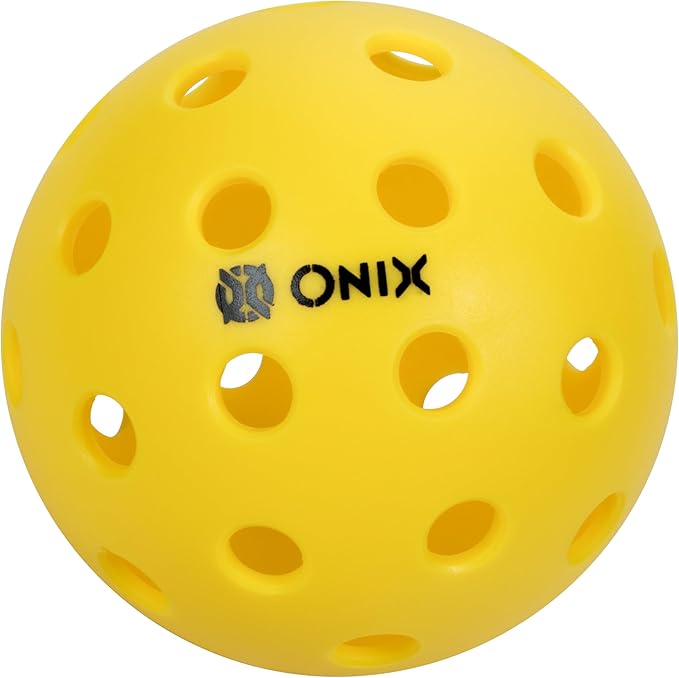
    Onix Dura Fast 40 pickleball
    #1
    Onix

    Dura Fast 40

    $25/6-pack
    9.2
    Best for: Tournament Play✓ Tournament Approved

    Ball Scores

    Durability
    8
    Visibility
    9
    Consistency
    9.5
    Bounce
    9.5
    Value
    9

    The gold standard for outdoor tournament play. The Dura Fast 40 is used in the majority of professional pickleball tournaments and offers the most consistent bounce and flight of any outdoor ball. Slightly less durable than some competitors, but the playing experience is unmatched. Best for competitive players who prioritize feel and predictability over longevity — most tournament players accept that a Dura will last 1–3 hard matches in cool weather. Avoid if you play primarily on rough asphalt in cold climates, where cracking is accelerated. Compared to the Franklin Core, the Dura is crisper off the paddle and produces a more authentic 'pop' that pros prefer.

    Pros

    • Official tournament ball
    • Most consistent bounce
    • True flight path
    • Excellent visibility
    • Crisp pop off the paddle

    Cons

    • Cracks in cold weather (under 50°F)
    • Premium price point
    • Short lifespan on rough courts
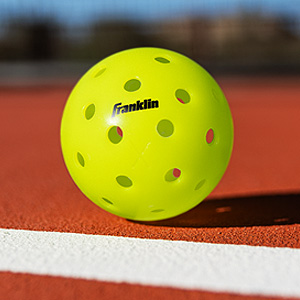
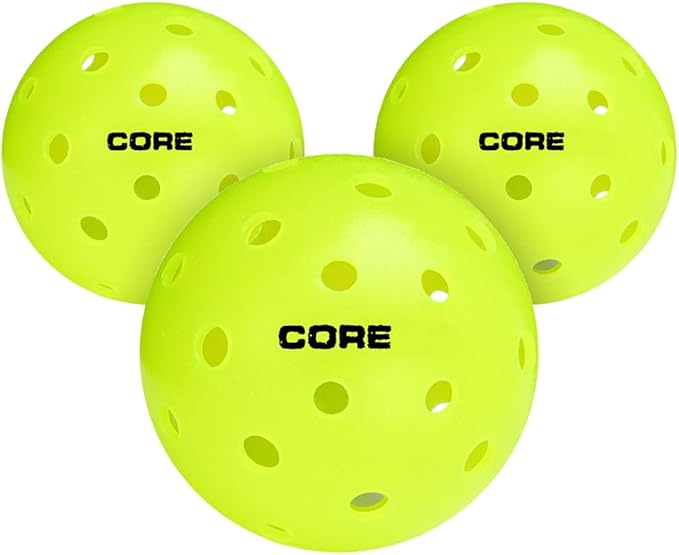
    Franklin X-40 Core Outdoor pickleball
    #2
    Franklin X-40

    Core Outdoor

    $22/6-pack
    9
    Best for: All-Around Outdoor✓ Tournament Approved

    Ball Scores

    Durability
    8.5
    Visibility
    9
    Consistency
    9
    Bounce
    9
    Value
    9

    Previously known as the Franklin X-40, the Core is another tournament-approved ball that rivals the Dura Fast 40. Slightly more durable with a very similar playing experience. Many recreational players prefer it for its longevity. Ideal for league players, club nights, and anyone who wants tournament-grade feel without burning through a six-pack every weekend. Skip it if you specifically need to practice with the exact ball used at your upcoming tournament (verify which is in play). Versus the Dura, the Core feels marginally softer at impact but holds its shape noticeably longer in moderate temperatures.

    Pros

    • Tournament approved
    • Great durability
    • Consistent performance
    • Wide retail availability
    • Better cold-weather tolerance than Dura

    Cons

    • Slightly softer than Dura Fast 40
    • Can go out of round before cracking
    • Batch variance in seam quality
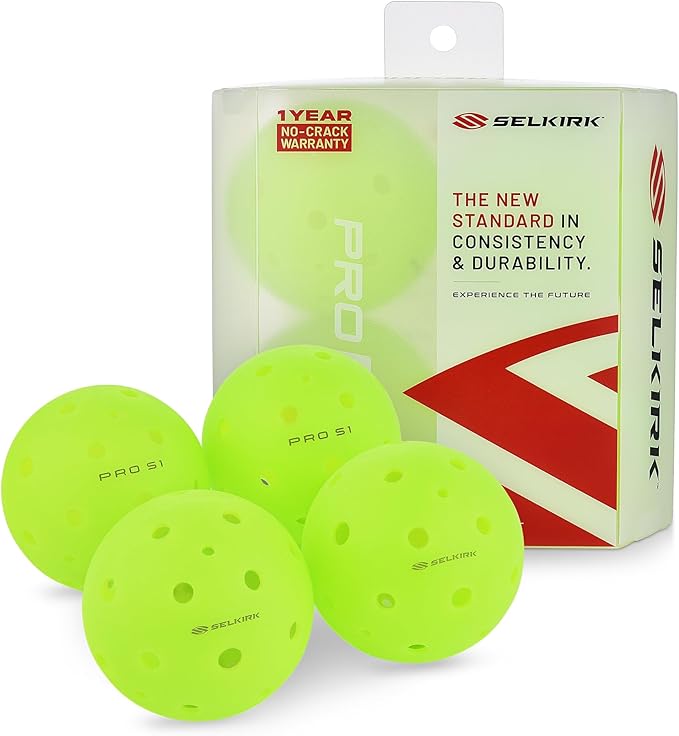
    Selkirk S1 Outdoor pickleball
    #3
    Selkirk

    S1 Outdoor

    $20/4-pack
    8.7
    Best for: Durability✓ Tournament Approved

    Ball Scores

    Durability
    9
    Visibility
    8.5
    Consistency
    8.5
    Bounce
    8.5
    Value
    8.5

    Selkirk's entry into the ball market focuses on durability. The S1 lasts significantly longer than the Dura Fast 40 while maintaining solid playing characteristics. A great choice for recreational players who go through balls quickly. Best for high-volume drillers, ball-machine users, and home-court players who would rather pay slightly more upfront for fewer replacements. Not the right pick if your local tournaments mandate Dura or Core balls and you want practice continuity. Compared to the Dura, the S40 feels a touch heavier and slower off the paddle, which suits control-oriented players.

    Pros

    • Excellent durability — often 2x Dura lifespan
    • Good consistency batch-to-batch
    • Trusted brand support
    • Holds shape on rough courts

    Cons

    • Slightly different feel than tournament standard
    • Less tournament adoption
    • 4-pack pricing is less economical
    Onix Onix G2 Outdoor pickleball
    #4
    Onix

    Onix G2 Outdoor

    $18/6-pack
    8.5
    Best for: Value✓ Tournament Approved

    Ball Scores

    Durability
    8
    Visibility
    9
    Consistency
    8.5
    Bounce
    8.5
    Value
    9

    ONIX's Fuse G2 offers excellent value with reliable performance. The bright optic yellow color provides great visibility and the ball plays consistently across temperatures. A solid choice for recreational and club play. Best for casual outdoor players, beginner clinics, and anyone wanting a tournament-style ball at a sub-$20 price. Avoid if you're prepping for a Dura-spec tournament — the flight path is similar but not identical. Stacks up well against the Onix Pure 2 with marginally better visibility and a slightly crisper bounce.

    Pros

    • Great value per ball
    • High-visibility optic yellow
    • Consistent in varying temps
    • Decent batch consistency

    Cons

    • Not as crisp as Dura Fast 40
    • Fewer tournament adoptions
    • Durability trails Selkirk S40
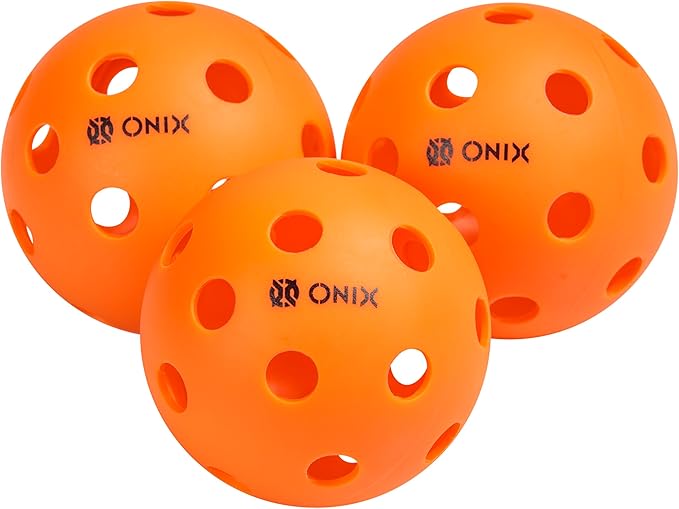
    Onix Pure 2 Outdoor pickleball
    #5
    Onix

    Pure 2 Outdoor

    $15/6-pack
    8.3
    Best for: Budget Outdoor

    Ball Scores

    Durability
    8.5
    Visibility
    8
    Consistency
    8
    Bounce
    8.5
    Value
    9

    The Pure 2 is Onix's more affordable outdoor offering. It's slightly softer than the Dura Fast 40, which some players prefer for recreational play. Good durability and a forgiving bounce make it ideal for casual games. Best for backyard play, family games, and beginners who don't yet need tournament-spec consistency. Skip it if you're an intermediate-or-better player practicing for competition — the softer feel can build habits that don't transfer to Dura-spec match play. Versus the JOOLA Fuse G2, the Pure 2 is a touch more durable but slightly less visible in dim light.

    Pros

    • Affordable price-per-ball
    • Durable construction
    • Softer, more forgiving feel
    • Friendly for new players

    Cons

    • Less pop than premium balls
    • Inconsistent between batches
    • Not approved for sanctioned play
    HEAD CORE Outdoor pickleball
    #6
    HEAD

    CORE Outdoor

    $16/6-pack
    8.1
    Best for: Casual Play

    Ball Scores

    Durability
    8
    Visibility
    8
    Consistency
    8
    Bounce
    8
    Value
    8.5

    HEAD's outdoor ball is a reliable, budget-friendly option for recreational players. It won't match tournament balls in consistency, but for casual play on outdoor courts it gets the job done at a fair price. Best for first-time buyers, social players, and bulk practice sessions where ball loss is common. Not recommended for serious league or tournament prep where bounce predictability matters. Compared to the Onix Pure 2, the HEAD CORE is similar in durability but slightly less consistent on bounce height between balls in the same pack.

    Pros

    • Budget-friendly
    • Decent durability for the price
    • Good for beginners
    • Easy to find at retail

    Cons

    • Less consistent bounce
    • Not tournament approved
    • Visibility lags top picks

    Best Indoor Pickleballs

    Onix Fuse Indoor Ball pickleball
    #1
    Onix Fuse

    Indoor Ball

    $20/6-pack
    9
    Best for: Indoor Tournament Play✓ Tournament Approved

    Ball Scores

    Durability
    8.5
    Visibility
    9
    Consistency
    9
    Bounce
    9
    Value
    8.5

    The Onix Fuse is the most popular indoor ball for competitive play. Its softer construction and larger holes create a slower, more controllable game that rewards placement over power. The standard for indoor tournaments. Best for league players, drill partners, and indoor competitive play in gyms or community centers. Skip it for outdoor courts — it'll feel mushy and inconsistent on asphalt. Versus the JOOLA Primo, the Fuse is slightly slower and more dink-friendly, which most indoor pros prefer.

    Pros

    • Tournament standard for indoor play
    • Excellent control and feel
    • Quiet on contact
    • Great visibility under gym lighting

    Cons

    • Doesn't work well outdoors
    • Can warp over time if stored hot
    • Premium price for an indoor ball
    JOOLA Primo Indoor Ball pickleball
    #2
    JOOLA Primo

    Indoor Ball

    $18/6-pack
    8.7
    Best for: Best Value Indoor✓ Tournament Approved

    Ball Scores

    Durability
    8
    Visibility
    9
    Consistency
    8.5
    Bounce
    8.5
    Value
    9

    The JOOLA HC-40 Primo offers a slightly firmer feel than the Onix Fuse while remaining a true indoor ball. Good bounce consistency and an attractive price point make it a popular choice for gym and community center play. Best for value-conscious club players and rec leagues. Avoid if your league specifically uses Onix Fuse and you want practice continuity. Compared to the Fuse, the Primo plays slightly faster, which power-oriented indoor players sometimes prefer.

    Pros

    • Great value for an indoor ball
    • Consistent bounce
    • Good feel for transition shots
    • Bright color

    Cons

    • Slightly firmer than Onix Fuse
    • Less widely used in tournaments
    • Durability trails Jugs
    Jugs Jugs Indoor pickleball
    #3
    Jugs

    Jugs Indoor

    $22/12-pack
    8.4
    Best for: Durability Indoor✓ Tournament Approved

    Ball Scores

    Durability
    9
    Visibility
    8
    Consistency
    8
    Bounce
    8.5
    Value
    9

    Jugs balls have been around since the early days of pickleball and remain a solid indoor option. They're extremely durable and offer a classic indoor playing experience with a softer feel and predictable bounce. Best for high-volume practice, drill sessions, and bulk-buy clubs that want long-lasting balls. Not ideal if you specifically need the modern Onix Fuse feel for tournament prep. The Jugs vs Fuse comparison: Jugs lasts noticeably longer but feels slightly muted in pop and color visibility.

    Pros

    • Extremely durable — best lifespan in indoor
    • Classic, predictable feel
    • Great bulk pricing in 12-packs
    • Trusted legacy brand

    Cons

    • Slightly dated design and color
    • Less vibrant under bright gym lights
    • Not the modern indoor standard
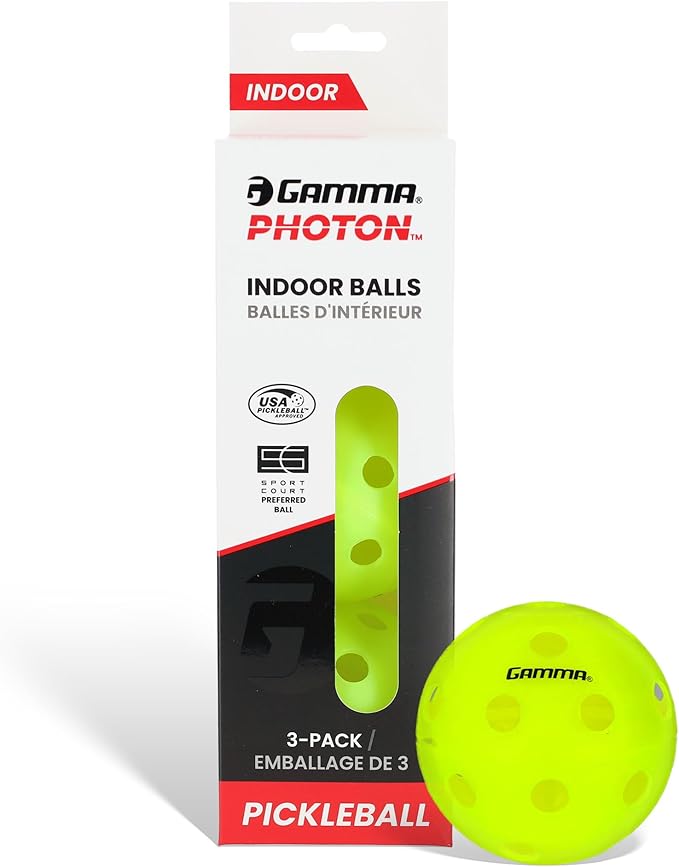
    Gamma Photon Indoor Pickleball pickleball
    #4
    Gamma Photon

    Indoor Pickleball

    $15/6-pack
    8.2
    Best for: Budget Indoor

    Ball Scores

    Durability
    7.5
    Visibility
    8.5
    Consistency
    8
    Bounce
    8
    Value
    8.5

    The Gamma Photon is a budget-friendly indoor ball that plays well in gym settings. Not as consistent as the Onix Fuse, but at this price point it's excellent for beginners and casual indoor play. Best for first-time indoor players, kids' clinics, and rec-center pick-up games. Skip it if you're prepping for an indoor tournament — the bounce consistency just isn't there. Versus the JOOLA Primo, the Photon is cheaper but trails on durability and batch-to-batch consistency.

    Pros

    • Very affordable entry point
    • Good visibility
    • Decent play for casual games
    • Easy to replace when worn

    Cons

    • Less consistent bounce
    • Lower durability
    • Not tournament approved

    Best Pickleballs for Concrete Courts

    Concrete is the harshest surface for pickleballs. The abrasive texture and uneven hardness cause balls to crack faster, go out of round more quickly, and lose their bounce consistency sooner than on dedicated pickleball court surfaces. If you're playing on concrete driveways, parking lots, or unfinished outdoor courts, here's what to look for and which balls hold up best:

    What Makes a Ball Good for Concrete

    • Hard plastic construction (40-hole outdoor balls)
    • Thicker wall construction to resist cracking
    • Consistent seam quality — weak seams crack first on rough surfaces
    • Budget-friendly — you'll go through more balls

    Best Balls for Concrete Surfaces

    1. Onix Dura Fast 40 — our #1 outdoor pick holds up better on concrete than softer competitors. The hard plastic resists cracking longer and the consistent seam construction handles rough surface contact well.
    2. Franklin X-40 Core Outdoor — slightly more durable than the Dura Fast 40 according to our testing, which makes it a strong choice for concrete where durability is the top priority.
    3. Selkirk S40 Outdoor — the durability leader in our outdoor rankings, the S40 is specifically worth considering for concrete play where balls wear out fastest.

    Pro tip: Buy in bulk for concrete play. Even the best outdoor balls will last only 3-5 games on rough concrete versus 6-10 games on a finished court surface. The Franklin X-40 6-pack and Onix Dura Fast 40 6-pack are the most economical options for high-turnover concrete play.

    How Long Do Pickleballs Last?

    The lifespan of a pickleball depends on three main factors: the court surface, temperature, and play intensity.

    3–10

    games for outdoor balls on concrete/asphalt

    15–25

    games for indoor balls on gym floors

    50%+

    longer in warm vs cold weather

    Signs a ball needs replacing: visible cracks, soft spots, the ball no longer bounces true, or it has gone "out of round" (egg-shaped). Serious players should always have fresh balls available for match play.

    Tournament Approved Balls

    USA Pickleball maintains a list of approved balls for sanctioned tournament play. The most commonly used tournament balls are:

    Onix Dura Fast 40

    40 holes • $25/6-pack

    Franklin X-40 Core Outdoor

    40 holes • $22/6-pack

    Selkirk S1 Outdoor

    40 holes • $20/4-pack

    Onix Onix G2 Outdoor

    40 holes • $18/6-pack

    Onix Fuse Indoor Ball

    26 holes • $20/6-pack

    JOOLA Primo Indoor Ball

    26 holes • $18/6-pack

    Jugs Jugs Indoor

    26 holes • $22/12-pack

    What Makes a Ball "Tournament Ready"?

    Tournament approval isn't just a marketing badge — USA Pickleball runs balls through a structured certification process that measures weight (0.78–0.935 oz), diameter (2.874–2.972 inches), bounce height from 78 inches onto a granite surface (must land between 30–34 inches), hardness, and surface design (uniform circular holes). A ball that passes earns a spot on the official approved list.

    Beyond certification, what makes a ball truly tournament ready is consistency across the entire pack — not just one good ball. Pros want every ball in a six-pack to bounce identically, fly identically, and respond identically to spin. The Dura Fast 40 earned its tournament dominance precisely because of this batch-to-batch reliability, even though individual balls don't last as long as some competitors.

    Regional preferences matter too. The PPA Tour and most major US outdoor events run on Dura Fast 40. APP Tour events have used both Dura and Franklin Core. Indoor regional tournaments almost universally use the Onix Fuse. If you're prepping for a specific event, always check the ball spec in the player packet and practice with that exact ball for at least two weeks beforehand — feel and timing transfer matters more than most amateurs realize.

    Ball Storage & Care: Extending Lifespan

    Pickleballs are surprisingly sensitive to storage conditions. A few simple habits can meaningfully extend usable life:

    • Avoid temperature extremes. Don't leave balls in a hot car (above 100°F warps them) or freeze them in a cold trunk overnight (brittleness causes first-rally cracks).
    • Store at room temperature in their original tube or a vented bag. Sealed plastic bags trap humidity and can soften the plastic over time.
    • Rotate balls during sessions. Swapping in a fresh ball every 30–45 minutes of hard play distributes wear and keeps every ball fresher for longer.
    • Pre-warm cold balls. In winter, keep two balls in an inside jacket pocket and rotate them — warm balls bounce truer and crack far less often.
    • Clean dirt off after outdoor play. A quick wipe with a damp cloth removes grit that accelerates wear inside the holes.

    Frequently Asked Questions

    What's the difference between indoor and outdoor pickleballs?
    Outdoor balls have 40 smaller holes, are made of harder plastic, and are heavier (~0.9 oz). Indoor balls have 26 larger holes, are softer, lighter, and produce less noise. Outdoor balls are designed to resist wind, while indoor balls prioritize control and quieter play.
    How long do pickleballs last?
    Outdoor balls typically last 3-10 games depending on court surface and temperature. They crack or go out of round with use. Indoor balls last significantly longer — often 15-25 games — because they're used on smoother surfaces and aren't exposed to weather.
    What pickleballs are used in tournaments?
    The Dura Fast 40 and Franklin X-40 (now Core) are the most common outdoor tournament balls. For indoor tournaments, the Onix Fuse is the standard. Always check your specific tournament's ball requirements.
    Do pickleball balls come in different colors?
    Yes. Yellow/optic yellow is the most common and recommended for visibility. Orange, white, and neon green are also available. Tournament rules typically require yellow or white balls.
    Can I use outdoor balls indoors?
    Technically yes, but it's not recommended. Outdoor balls bounce higher and move faster on smooth indoor surfaces, making the game less enjoyable. Indoor balls are specifically designed for gym floors.
    What are the best pickleballs for concrete courts?
    The Franklin X-40 Core Outdoor and Onix Dura Fast 40 are the top choices for concrete surfaces. Both use hard 40-hole plastic construction that resists cracking on abrasive surfaces better than softer indoor or budget outdoor balls. Expect shorter lifespan on concrete regardless of ball choice — buy in 6-packs to offset the faster turnover. Avoid indoor balls entirely on concrete — the softer plastic cracks almost immediately.